
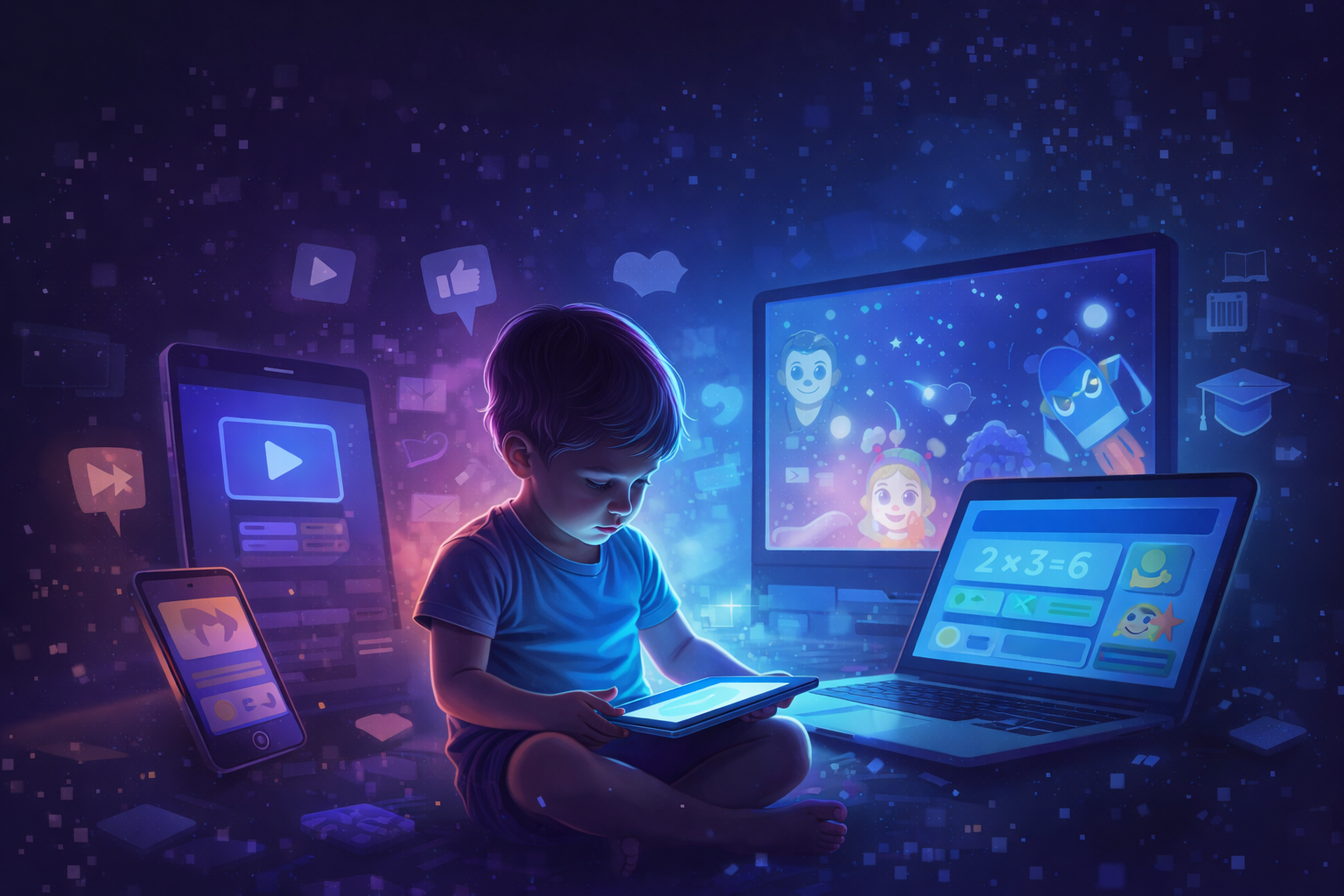
Is My Child Spending Too Much Time on Screens?
It’s one of the most common concerns parents have today:
“Is my child spending too much time on screens?”
With tablets, phones, and smart TVs becoming part of everyday life, it’s easy to feel like screens are taking over childhood.
But here’s what research and experts consistently show:
The problem isn’t just how much time children spend on screens. It’s what they do during that time.
What Research Actually Says About Screen Time
The conversation around screen time has evolved a lot in recent years.
According to the American Academy of Pediatrics, parents should focus less on strict limits and more on:
The quality of content
The level of interaction
The purpose of use
Similarly, studies from the Harvard Center on the Developing Child show that children learn best when they are:
Actively engaged
Solving problems
Interacting with content
Receiving feedback
Passive consumption, such as watching endless videos, does not yield the same cognitive benefits.
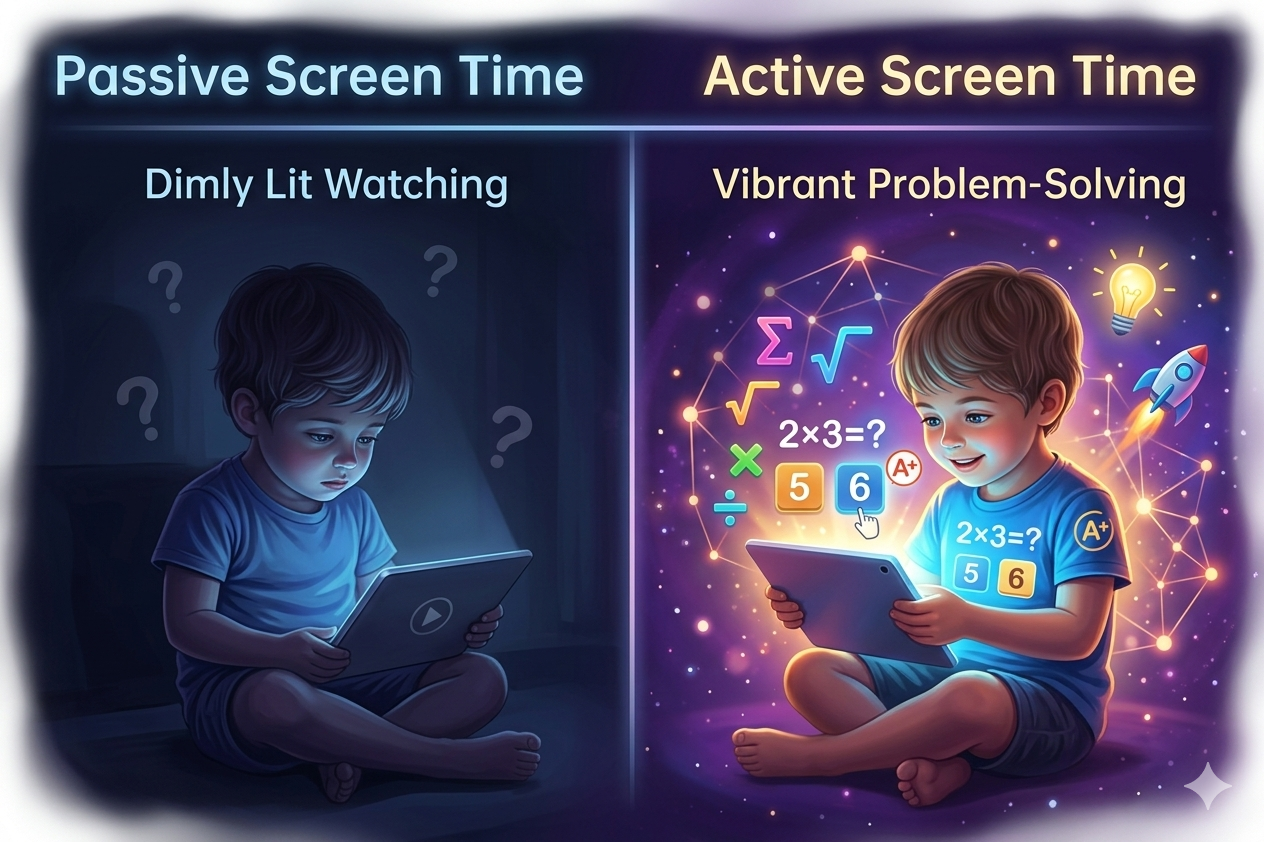
Passive vs Active Screen Time (Backed by Research)
Research consistently distinguishes between two types of screen use:
Passive Screen Time
Watching videos without interaction
Scrolling endlessly
Low attention engagement
Studies have linked excessive passive screen use with:
Reduced attention span
Lower academic performance
Sleep disruption
Active Screen Time
Problem-solving
Reading and comprehension
Interactive learning
Skill-building activities
A study referenced by the Organisation for Economic Co-operation and Development found that moderate, purposeful digital use can actually support learning outcomes when used correctly.
The key takeaway:
Screens can either distract or develop, it depends on how they are used.
How Much Screen Time Is Too Much?
There’s no universal number that fits every child.
However, general guidance suggests:
Ages 2–5: up to 1 hour of high-quality content
Ages 6+: consistent limits with focus on balance
But even experts agree:
A child who spends 2 hours learning is not the same as a child who spends 2 hours scrolling.
That’s why the conversation is shifting from quantity → quality.
Signs Screen Time May Be Harmful
Screen time becomes a concern when it begins to replace essential developmental activities.
Watch for:
Decreased attention span
Lack of interest in offline activities
Emotional dependence on devices
No clear learning outcomes
Difficulty focusing without screens
If most screen time is passive, it’s time to rethink, not necessarily remove screens, but upgrade how they’re used.
The Smarter Approach: Replace, Don’t Remove
Instead of constantly limiting screen time, a more effective strategy is:
Replace low-quality screen use with high-quality, structured experiences
Children are naturally curious. If given the right environment, screens can become tools for:
Learning
Thinking
Creating
Exploring
This is exactly where modern educational platforms come in.
How Platforms Like Edumento and Esotoria Change the Game
Platforms like Edumento and Esotoria are built on a different philosophy:
Technology should build thinkers, not just consumers.
Instead of passive entertainment, these platforms introduce:
Structured learning paths
Interactive challenges
Real-time feedback
Skill-based engagement
Why This Approach Works (Backed by Learning Science)
Educational psychology research highlights three key elements that improve learning outcomes:
1. Active Engagement
Children learn more when they do, not just watch.
Interactive environments encourage:
Problem-solving
Decision-making
Critical thinking
2. Immediate Feedback
According to research in learning sciences, instant feedback improves retention and motivation.
Children can:
Correct mistakes quickly
Understand concepts faster
Stay motivated through progress
3. Motivation Through Progress
Gamified learning systems - when used correctly - can increase consistency.
Instead of distraction, children experience:
Goals
Rewards
Progress milestones
For example, in environments like Edumento, children don’t just “use an app”, they:
Earn points
Track progress
Use their achievements to explore new worlds and experiences
This turns screen time into a purpose-driven journey, not passive consumption.
From Consumption to Exploration
One of the biggest shifts in modern learning platforms is this:
Old model: Consume content
New model: Explore, interact, and grow
Instead of simply watching, children:
Solve challenges
Discover new concepts
Explore environments
Build skills step by step
This aligns with how children naturally learn, through curiosity and exploration.
The Parents’ Role in a Digital World
You don’t need to eliminate screens to protect your child.
You need to guide their experience.
Here’s what works:
Choose platforms with educational value
Prioritize interactive over passive content
Stay involved, ask what they learned
Use tools that provide progress visibility
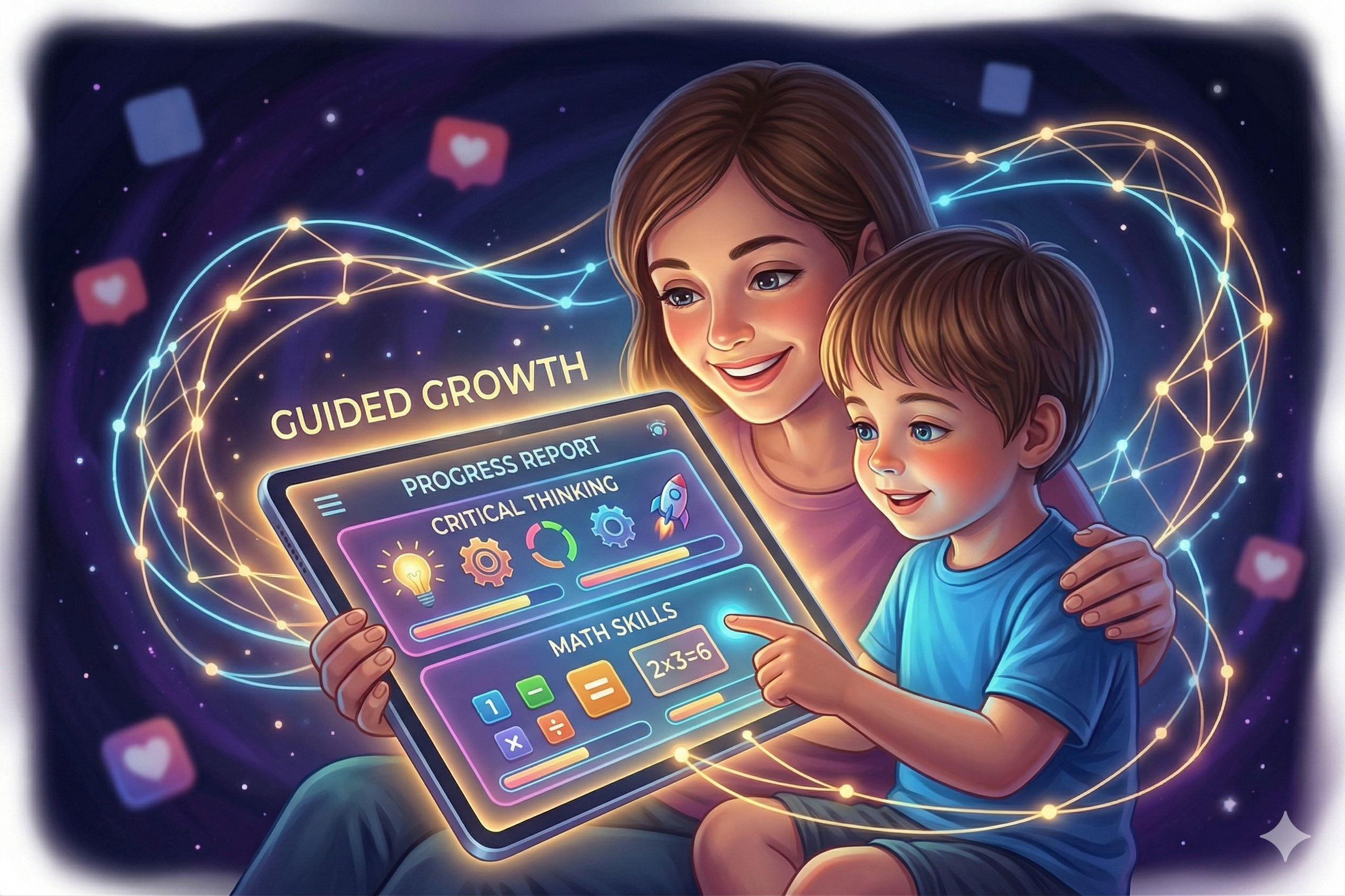
Platforms like Edumento support this by giving parents clear insights into their child’s activity and progress, making screen time transparent, not uncertain.
A Better Question to Ask
Instead of asking:
“Is my child spending too much time on screens?”
Ask:
“Is my child growing during that time?”
Because that’s what really matters.
Final Thoughts
Screens are not the problem.
Unstructured, passive use is.
The future will belong to children who know how to:
Think critically
Solve problems
Learn independently
Use technology wisely
Platforms like Edumento and Esotoria are examples of how technology can support that future, by transforming screen time into:
Learning time
Thinking time
Building time
Ready to Make Screen Time Work for Your Child?
Start by shifting from limits to purpose.
Because when children use screens the right way…
They’re not wasting time; they’re building their future.